



There are countless activities that have to fit together seamlessly to deliver an exemplary customer experience to your life or non-life insurance client. As a broker or intermediary, you control the customer-facing advice aspects of the broader value proposition, dealing in human relationships and trust.

For many years, success in financial operations was measured by one simple metric: volume. How many transactions were processed? How quickly were payments reconciled? How efficiently could teams move work through the system?
While speed and efficiency remain important, they are no longer enough.
Today's financial services environment demands something greater. Organisations are increasingly being measured not only by how much they process, but by the value they create through every transaction, every process and every decision.
At QSURE, we've seen this shift firsthand. Operational excellence is no longer about moving data from one point to another. It is about enabling better decisions, reducing risk, strengthening governance and creating confidence for clients and stakeholders.
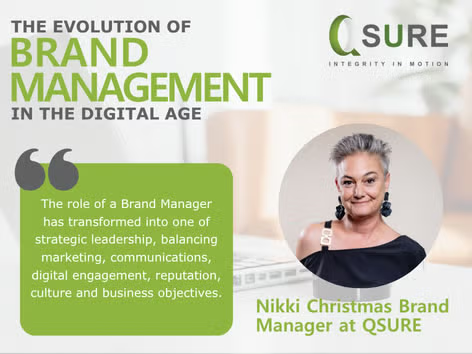
There was a time when brand management was largely defined by logos, colour palettes, advertising campaigns and corporate identity manuals. A strong visual identity and memorable messaging were considered the hallmarks of a successful brand.
While these elements remain important, the role of brand management has evolved dramatically.
Today's brands exist in a world where information travels instantly, customer expectations change rapidly, and reputations can be built, or damaged, within minutes. As a result, the modern Brand Manager has become far more than a custodian of visual identity. The role has transformed into one of strategic leadership, balancing marketing, communications, digital engagement, reputation, culture and business objectives.
